

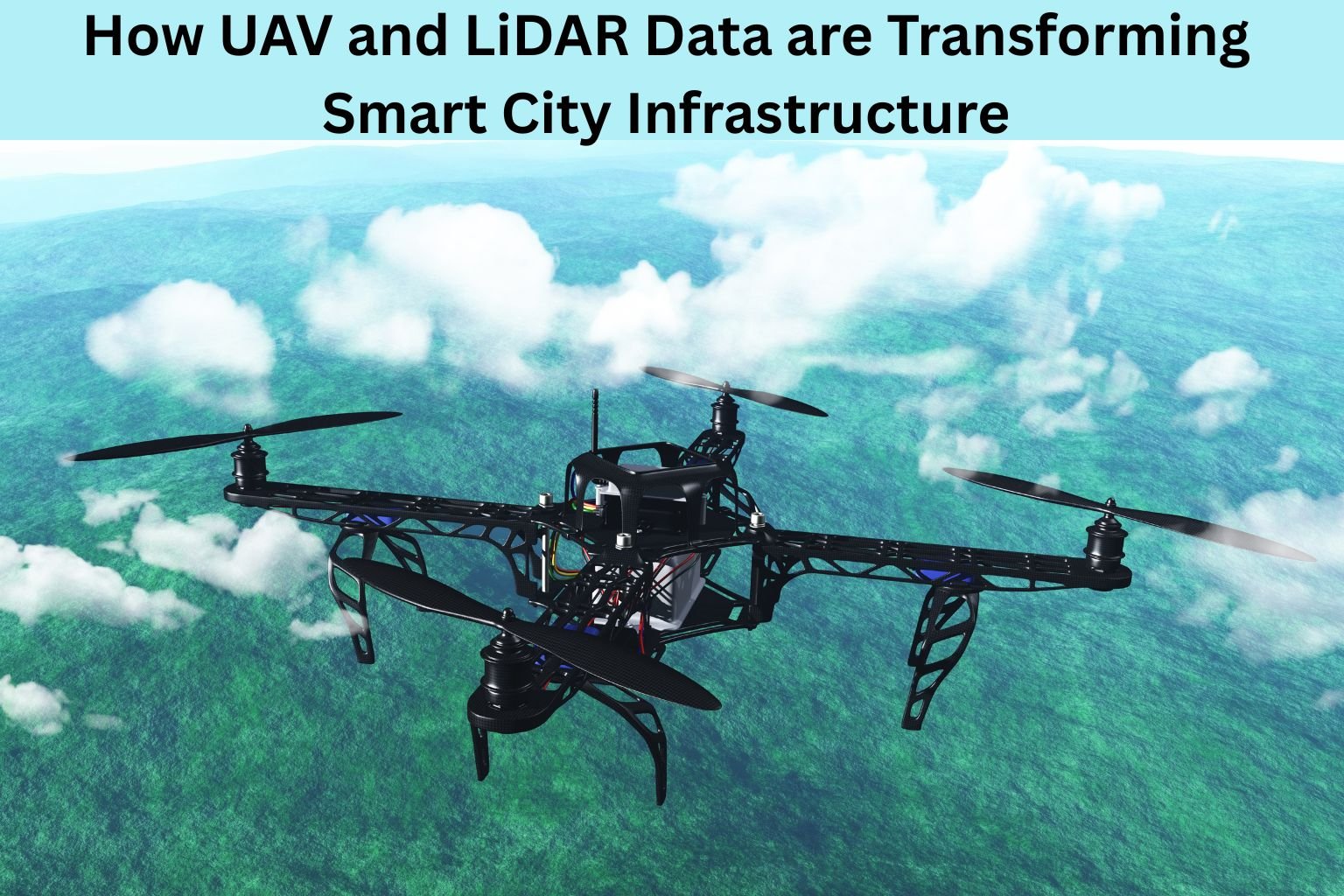
The use of UAV and LiDAR for Smart Cities has become necessary in a world that is urbanizing at an exponential rate, to be able to implement responsive, sustainable, and data-based urban ecosystems more efficiently. Modern aerial mapping technologies including drones (UAV) and LiDAR allow city planners, engineers and developers to visualize, investigate and iterate urban form in a very precise and state-of-the-art way. Geoshot uses these technologies to support governments and organizations to develop smarter, safer and more resilient cities.
Transforming Urban Development with Smart City Mapping Technology
Smart City Mapping Technology includes the use of unmanned aerial vehicles (UAVs), LiDAR (Light Detection and Ranging), and other sophisticated data analytics to develop high-resolution three-dimensional models of urban regions. These digital twins create a meeting space for smarter urban planning and any resource and infrastructure plan and management process.
UAV mapping can be captured and processed quickly with very accurate and cost-effective data collection in comparison to traditional survey methods that can take considerable time and person-hours. UAVs, along with LiDAR sensors, provide another advantage, which is the ability to penetrate vegetation and discern small surface detail and generate very accurate elevation models. This is perfect for tracking growth in the city, planning new development or outlining a strategy for maintaining critical structure.
LiDAR Data Applications in Urban Planning
There are several applications that have changed the field using LiDAR Data Application Urban Planning. The use of LiDAR technology provides Urban Planners with useful, accurate 3D spatial data that can be useful for every phase of the city development process – site selection, construction activity, and long term urban maintenance. Some applications of LiDAR Technology are summarized below.
- Urban Terrain and Topography Modeling- LiDAR data is utilized to produce high-resolution elevation maps that allow planners to show terrain variations, reduce flash flood risk by showing topography, and create and plan for the most efficient drainage systems.
- Building and Infrastructure Modeling- LiDAR provides high-resolution 3D building and surrounding adjacent infrastructure, such as bridges and transportation systems. Engineers can use LiDAR data to create 3D prototypes or models and simulate their projects before construction starts and analyze potential environmental impact.
- Utility Mapping- LiDAR data will assist in accurate mapping of above and below ground stressed utility networks, or infrastructure. Mapping below ground utilities can reduce damage and “vacuum excavation” risk, and pinpoint the location and depth, which results in improved planning and timing for maintenance and exposure risk mitigation.
- Environmental Monitoring- LiDAR data will assist urban planners in effectively monitoring environmental change by improvements in vegetation loss detection, air quality data, and bodies of water. This can improve environmental awareness leading to better long-term planning for sustainable, environmental-aware, and compliant urban growth.
Drone Mapping for Infrastructure Development
Drone Mapping for Infrastructure Development has transformed not only cities but also the way we manage large-scale construction and maintenance work. Using UAVs equipped with LiDAR and photogrammetry sensors, engineers can capture aerial imagery and point cloud data to monitor improvements in real time.
Benefits include:
- Accurate Construction Progress Monitoring: UAVs allow project stakeholders to review site conditions with reference to a digital plan, ensuring the work is completed as expected, on schedule, and according to plans.
- Inspection and Maintenance: UAVs can inspect and maintain hard-to-reach objects like transmission lines, bridges, and rooftops safely, both reducing downtime and eliminating the need for manual inspection.
- Road and Transport Planning: UAVs enhance data used for road alignment design, traffic flow analysis, and smart-mobility infrastructure planning.
- Disaster Management: Using drones supports post-natural disaster mapping, rapid assessment of damage, and situational awareness for office coordination.
Integrating UAV and LiDAR for Smart Cities: The Geoshot Advantage
At Geoshot, we focus on the application of UAV and LiDAR for Smart Cities to offer geospatial solutions that enable decision makers to make informed decisions. Our integrated mapping and analysis services include UAV based LiDAR data collection, 3D city modelling, asset mapping, and geospatial visualization.
With a combination of aerial intelligence and smart analytics, Geoshot allows urban developers to identify challenges early, mitigate risk, and more strategically plan for the next phase of the development program. This will allow municipalities to build smarter, sustainable, and interconnected cities that are ready for the future.
The Future of Smart Cities: Data-Driven and Sustainable
The future of our smart cities, depends on our ability as cities, to leverage geospatial data to make informed decisions in shaping the urban environment. UAV and LiDAR technologies are at the core of this trend and will allow real time monitoring, predictability analytics and interface with other IOT systems. With precise, ongoing geospatial data, cities can improve mobility, create more efficient land use practices, improve public safety, and generally reduce environmental impact.
As these technologies grow in capacity, they will continue to support city authorities, urban planners and individual developers when making on the ground, informed, efficient, and sustainable decisions.
Frequently Asked Questions

Founder & CEO
Bigyan Kar is the driving force behind Geoshot Technologies and has been since its founding, leading the company’s vision in delivering advanced CAD, GIS, graphics, map illustrations, and 3D solutions across multiple industries. While Geoshot serves a wide range of sectors, Bigyan has maintained a strong specialization in golf course graphics, CAD drafting, and mapping—ensuring highly accurate and visually compelling representations for golf architects and planners. His commitment to precision, visual clarity, and innovation has enabled Geoshot to produce high-quality 3D models, detailed maps, and comprehensive design visualizations for clients worldwide. Under his leadership, Geoshot Technologies has grown into a trusted partner for architects, planners, designers, and engineering teams by continuously investing in technology, talent, and workflow excellence. His ability to blend technical expertise with creative insight has established Geoshot as a leader in premium 3D visualization, CAD drafting, and mapping solutions across diverse sectors, with a distinguished reputation in the golf design industry.