

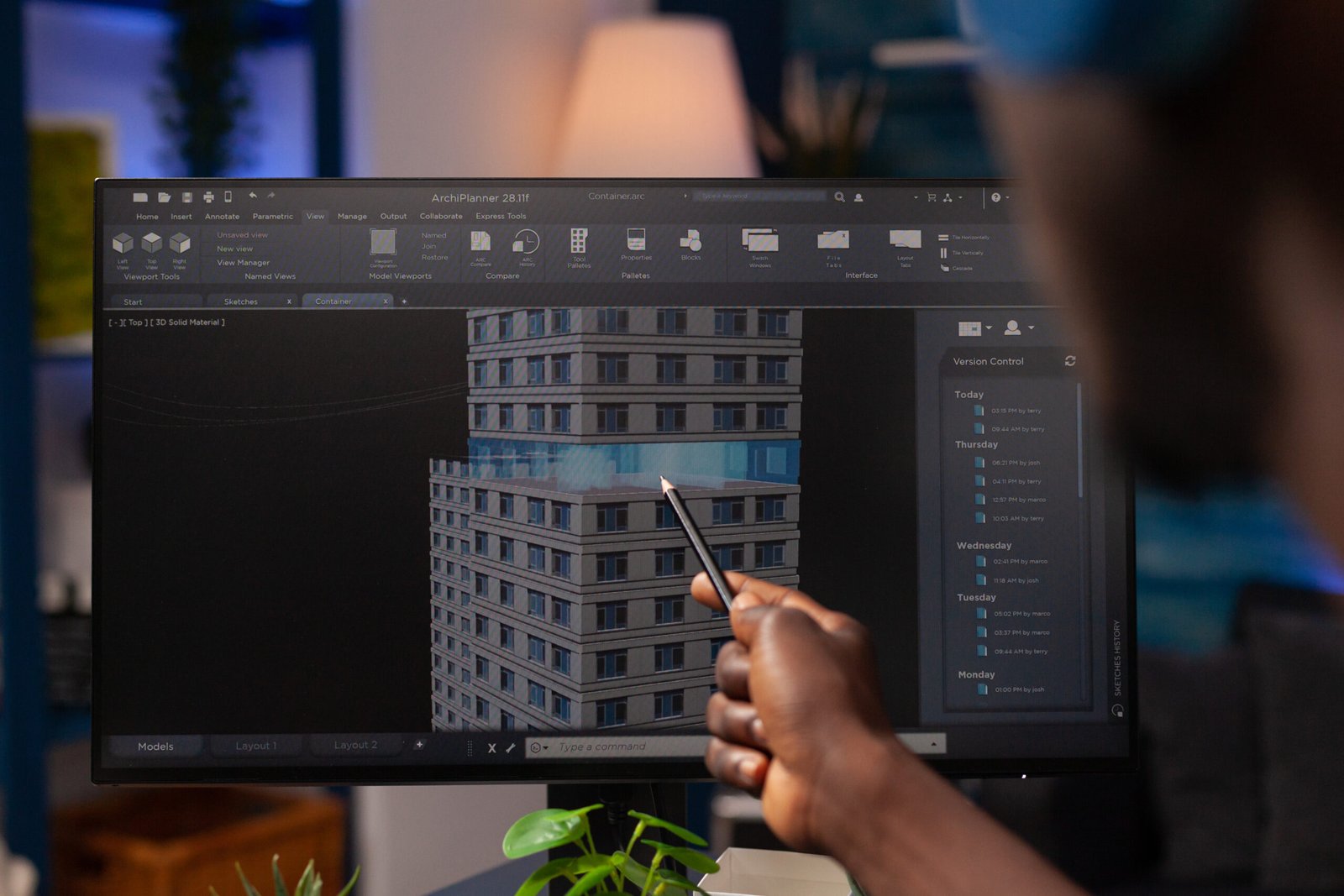
Think of a world where million-dollar jobs were still given the green light on the basis of faded blueprints and technical information. Sounds like insanity, right? Well, that was the norm for the construction industry for decades upon decades. Today, technology has advanced a great deal. The blueprint is being supplanted by the photorealistic image, and we now have unbelievable virtual experiences that make it a lot less complex. But the most revolutionary technology is 3D visualization in construction. This technology, used in the AEC (architecture, engineering, and construction) industry, is more than just “fluff” marketing; it is a technological advancement that is changing the way we design, communicate, and construct. It is the ultimate translator of the complicated language that is architecture and engineering, into a visually comprehensible, universal language.
Unlocking Clarity and Collaboration
In any construction project, the biggest struggle is communication. The architect, the engineer, the developer, and the end-client generally speak very different professional languages. The beauty of 3D Visualization in Construction, is that it provides everyone with a single, unified reality that does not depend on assumptions and/or guesswork.
Our implementation of high-quality Construction 3D Rendering technology allows stakeholders to walk through a project long before digging begins. Immediately, design errors, spatial, conflicts, or even aesthetic worries that designing on 2D cannot replicate, will come to light. For instance, a developer can visualize how sunlight will inundate an atrium at 9 AM in the morning, or a facility manager can see the precise location of HVAC units as they are placed into the building. This level of detail provided by Construction 3D Rendering helps facilitate decisions and can speed up decisions and reduce costly changes during the construction phase.
This visual impact is reflected in the market data. A recent industry report highlighted that advanced visualisation methods can reduce by as much as 40% the number of Request for Information (RFIs) which, then that is, the inevitable, formal questions issued during construction. That’s the power of Visual Communication in Design.
Mitigating Risk with Precision 3D Models
The use of 3D Models for Architectural Projects is the core of risk mitigation. These aren’t just pretty pictures; they are geometrically precise, data-rich assets. By creating accurate 3D Models for Architectural Projects based on BIM (Building Information Modeling) data, we can conduct virtual clash detection, ensuring that structural, mechanical, and electrical systems do not physically interfere with each other. This is crucial for complex urban developments and infrastructure projects.
Furthermore, 3D Visualization in Construction is transforming how projects are sold and financed. When investors or future tenants can experience the finished product—complete with realistic materials, lighting, and landscaping—the confidence in the investment skyrockets. This proactive approach to Visual Communication in Design helps secure approvals faster and drives pre-sales more effectively.
The Growth of Digital Reality
The swift uptake of this technology in the sector confirms its enormous importance. The global market for architectural visualization (with 3D Visualization in Construction as a major part of this) is predicted to grow from around $1.5 billion in 2024 to almost $4.5 billion by 2030. A tripling in size indicates a clear industry directive: digital visualization is not just optional anymore; it’s the standard of development today. Every successful firm now sees providing rigorous Construction 3D Rendering as a requirement to compete today.
At Geoshot we excel in all aspects of advanced 3D Visualization in Construction to convert your design sketches into superior, actionable visual assets. We give architects, engineers and developers the appropriate 3D Models for Architectural Projects and high-quality Visual Communication in Design they need to complete flawlessly – on silver budget, on budget, and on time projects.
Frequently Asked Questions

Founder & CEO
Bigyan Kar is the driving force behind Geoshot Technologies and has been since its founding, leading the company’s vision in delivering advanced CAD, GIS, graphics, map illustrations, and 3D solutions across multiple industries. While Geoshot serves a wide range of sectors, Bigyan has maintained a strong specialization in golf course graphics, CAD drafting, and mapping—ensuring highly accurate and visually compelling representations for golf architects and planners. His commitment to precision, visual clarity, and innovation has enabled Geoshot to produce high-quality 3D models, detailed maps, and comprehensive design visualizations for clients worldwide. Under his leadership, Geoshot Technologies has grown into a trusted partner for architects, planners, designers, and engineering teams by continuously investing in technology, talent, and workflow excellence. His ability to blend technical expertise with creative insight has established Geoshot as a leader in premium 3D visualization, CAD drafting, and mapping solutions across diverse sectors, with a distinguished reputation in the golf design industry.